

Best Grow Light for a Greenhouse: 5 LED Picks That Deliver
Last Updated: October 23, 2026
Quick Summary
The best grow light for a greenhouse overall is the Maxibright Varidrive 500W/1000W LED, which delivers 3.0 µmol/J and runs as one 1000W unit or two independent 500W halves for £300.00. For large canopies, the Daylight 1030W Pro offers the highest efficiency at 3.1 µmol/J.
- Efficacy of 2.5 µmol/J is the entry benchmark for modern LED fixtures, with high-end units reaching 3.0 µmol/J or more.
- IP65-rated fixtures are the sensible floor for wet greenhouse environments.
- Size fixtures around crop Daily Light Integral rather than wattage.
- Hang bar-style LEDs 30-60cm above the canopy for propagation and 60-100cm for mature crops.
- Space fixtures so footprints overlap by about 10-15% at canopy height to prevent dark bands.
Table of Contents
- How We Chose the Best Grow Light for a Greenhouse
- Comparison Table: Greenhouse LED Grow Lights at a Glance
- 1. Maxibright Varidrive 500W/1000W LED: Best Overall Grow Light for a Greenhouse
- 2. Maxibright Daylight LED 1030W Pro: Highest Output for Large Canopies
- 3. Maxibright MaxiLED Pro MONO 2800: Best Value Full-Spectrum Fixture
- 4. Maxibright MaxiLED Pro DUAL 2290: Best for Spectrum Control
- 5. Maxibright Daylight LED Pro Strips and Seedling Bars: Grow Lights for Greenhouse Seedlings
- Sizing Greenhouse Supplemental Lighting: DLI, PPFD and Photoperiod
- Frequently Asked Questions
How We Chose the Best Grow Light for a Greenhouse
Choosing the best grow light for a greenhouse in 2026 comes down to one number: efficacy, measured in µmol/J. A 2026 buyer's guide from Mr. Grow It's LED grow light benchmarks treats 2.5 µmol/J as the entry benchmark for modern LED fixtures, with high-end units reaching 3.0 µmol/J or more.
At The Growers Shop, we supply these fixtures to growers running everything from a 1.5m lean-to to a full commercial canopy, so we know which specs actually matter once the box is open.
The Selection Criteria That Actually Matter
Four criteria decided the ranking. Efficacy (µmol/J) came first, because it sets your electricity bill for the next decade. Second, coverage area: a fixture rated for 1.5 x 1.5m will not light a 1.8 x 1.8m bay properly, whatever the marketing says. Third, ingress protection: a greenhouse is a wet environment, so IP65-rated fixtures are the sensible floor. Fourth, control: dimming and linkability let you match output to the season instead of running flat out in October.
Wattage alone tells you almost nothing. A 2026 guide from Thrive Agritech's greenhouse lighting guidance recommends sizing around crop Daily Light Integral rather than fixture wattage, which is the approach we take below.
Comparison Table: Greenhouse LED Grow Lights at a Glance
| Fixture | Power | Efficacy | Price | Best For |
|---|---|---|---|---|
| Maxibright Varidrive 500W/1000W | 1000W (2 x 500W) | 3.0 µmol/J | £300.00 | Most greenhouses |
| Maxibright Daylight 1030W Pro | 1030W | 3.1 µmol/J | £1,450.00 | Large canopies |
| Maxibright MaxiLED Pro MONO 2800 | 1000W | 2.8 µmol/J | £850.00 | Value full-spectrum |
| Maxibright MaxiLED Pro DUAL 2290 | 860W | 2.8 µmol/J | £820.00 | Spectrum control |
| Daylight Pro Strips and Seedling Bars | 20W to 100W | 2.8 µmol/J | £19.99 to £170.00 | Seedlings and propagation |
1. Maxibright Varidrive 500W/1000W LED: Best Overall Grow Light for a Greenhouse
At 3000 µmol/s PPF and 3.0 µmol/J, it clears the modern efficiency benchmark with room to spare.

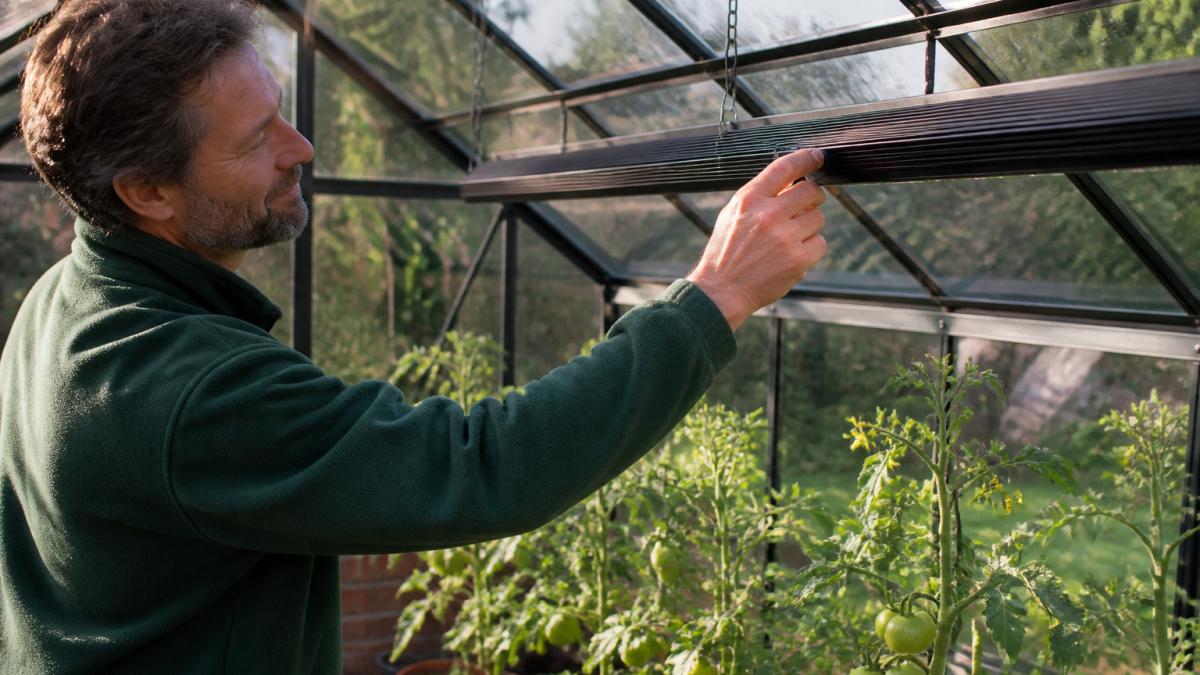
What works: Genuine dual-mode flexibility, 3.0 µmol/J efficiency, and a price of £300.00 that undercuts every other full-size fixture here.
What doesn't: The split design means two power leads to route, and the modular frame is heavier than a single-bar strip at 7.6kg.
2. Maxibright Daylight LED 1030W Pro: Highest Output for Large Canopies
For a commercial-scale greenhouse, output per fixture decides how many units you buy. The Daylight 1030W Pro delivers 3193 µmol/s at 3.1 µmol/J, the highest efficiency on this list, across a 1.5 x 1.5m to 1.8 x 1.8m footprint.

The spectrum now includes added Far Red, which supports flowering response, and the whole unit is IP65 rated for wet greenhouse conditions.
What works: Best-in-class efficiency, even coverage, and IP65 protection.
What doesn't: At £1,450.00 it is a serious investment, and Maxibright recommends CO₂ supplementation to get the most from it at full intensity.
3. Maxibright MaxiLED Pro MONO 2800: Best Value Full-Spectrum Fixture
The MONO 2800 is the sensible middle ground.

Dimming steps at 25%, 50%, 75% and 100% are set by a built-in dial, and link cables let you control multiple units together. It runs silent with no fans or moving parts.
What works: Full-spectrum output at a mid-range price, with a two-year guarantee.
What doesn't: At 2.8 µmol/J it trails the Pro fixtures on efficiency, and the single spectrum means no UV or far-red channel to switch.
4. Maxibright MaxiLED Pro DUAL 2290: Best for Spectrum Control
The DUAL 2290 is the pick for growers who want to change spectrum, not just intensity.
The built-in two-channel dimmer and timer is the feature that earns its place here. You can schedule spectrum shifts without buying a separate controller.
Maxibright Varidrive 500W/1000W LED with Integrated Driver V2.0 3.0 µmol/J EU →
What works: True spectrum control with an integrated timer, at a lower price than the MONO.
What doesn't: Lower total output than the 1000W fixtures, so it suits a single 1.5 x 1.5m bay rather than a large canopy.
5. Maxibright Daylight LED Pro Strips and Seedling Bars: Grow Lights for Greenhouse Seedlings
Seedlings and cuttings need far less light than a flowering canopy, and blasting them with a 1000W fixture wastes money and stresses plants. The Daylight Pro Strip comes in 60W (£150.00) and 100W (£170.00) versions, both at 2.8 µmol/J with IP65 protection and linkable control.
For tighter propagation, the Gorilla Propagation LED 24W at £25.00 runs a focused blue spectrum for root development across 120cm, and up to eight strips daisy-chain from one power lead. The Secret Jardin Cosmorrow 20W at £19.99 is the cheapest entry point, a waterproof 24V strip you can clip or hang.
What works: Low running cost, close mounting, and linkable setups that scale with your tray count.
What doesn't: These strips will not carry a plant through flowering; they are a propagation tool, not a main fixture.
Sizing Greenhouse Supplemental Lighting: DLI, PPFD and Photoperiod
Greenhouse supplemental lighting is the light you add on top of natural sunlight, and sizing it correctly starts with your crop's Daily Light Integral target rather than the fixture's wattage. DLI is the total light a plant receives in a day, measured in mol/m²/day. PPFD is the intensity at any moment, measured in µmol/m²/s. Photoperiod is how many hours the lights run.
Practical DLI and PPFD targets by crop and stage
Use these as starting points, then adjust for your variety and market. They are widely used benchmarks in protected horticulture, not guarantees.
| Crop and stage | DLI target (mol/m²/day) | Typical PPFD at canopy (µmol/m²/s) | Photoperiod (hours) |
|---|---|---|---|
| Tomato seedlings | 6-10 | 150-250 | 14-16 |
| Tomato vegetative | 12-18 | 300-450 | 14-16 |
| Tomato flowering and fruiting | 20-30 | 500-700 | 14-16 |
| Leafy greens and herbs | 10-14 | 200-300 | 14-16 |
| Cucumber vegetative | 15-20 | 350-500 | 14-16 |
| Strawberry flowering | 15-20 | 350-500 | 12-14 |
| Propagation and cuttings | 4-8 | 100-200 | 16-18 |
These are supplemental targets, not total targets. Your greenhouse already delivers some DLI from daylight, so the fixture only needs to close the gap in the weakest month.
How to calculate fixture count for your greenhouse
Work through this in four steps.
- Set your crop DLI target. For a tomato crop in fruiting, use 22 mol/m²/day as a working figure.
- Estimate natural DLI in your weakest month. A PAR meter reading at canopy level through a dull December day might average 3-5 mol/m²/day in an unlit glasshouse at UK latitudes. Take the lower figure to be safe.
- Calculate the shortfall. 22 minus 4 equals 18 mol/m²/day that must come from fixtures.
- Convert to fixture output. Divide the shortfall by the fixture's delivered PPF per square metre and the hours you are willing to run. A 1000W fixture at 3.0 µmol/J delivers roughly 3000 µmol/s. Spread over 3.24m² (1.8 x 1.8m), that is about 925 µmol/m²/s at the canopy before losses. Run for 6 supplemental hours and you add roughly 20 mol/m²/day, enough to close an 18 mol gap with margin for wall and floor losses.
In practice, most small greenhouse growers find one 1000W fixture covers a 1.8 x 1.8m bed for a high-light crop, while a 600W fixture suits a 1.2 x 1.2m bed. For a 3m x 6m lean-to running tomatoes, that usually means four to six 1000W fixtures on a grid, spaced so their footprints overlap by about 10-15% at canopy height.
Mounting height and coverage
Mounting height depends on the fixture's beam angle and the crop. As a rule of thumb, bar-style LEDs are hung 30-60cm above the canopy for propagation and 60-100cm for mature crops. Raise them as plants grow, and check PPFD at the top of the canopy rather than at the floor. A fixture rated for a 1.5 x 1.5m footprint at 60cm will not cover the same area at 120cm; the footprint grows but the intensity falls, so you may need to dim or add fixtures.
Seasonal scheduling and photoperiod
A greenhouse grow light timer should follow the season, not a fixed 12-hour schedule. In summer, run supplemental lighting for a short window at each end of the day to extend the photoperiod without overheating the house. In winter, extend the photoperiod to hit your DLI target, but stop adding hours once the marginal gain in DLI per hour of electricity stops paying for itself.
Frequently Asked Questions
What type of grow light is best for a greenhouse?
Full-spectrum LED fixtures are the practical choice for most greenhouses. They run cooler than high-pressure sodium lamps, use less electricity for the same output, and give you white light you can work under. Aim for a fixture rated 2.5 µmol/J or higher; modern units such as the Maxibright Varidrive reach 3.0 µmol/J, and the Daylight 1030W Pro hits 3.1 µmol/J. Match the fixture's coverage area to your canopy rather than buying on wattage alone.
How many hours a day should greenhouse grow lights be on?
Most crops need 14 to 18 hours of light during vegetative growth and 12 hours during flowering, with a dark period every night. Set a greenhouse grow light timer to hold that schedule consistently, since plants respond to regularity more than to extra hours. Leaving lights on for 24 hours suits very few crops and can disrupt flowering, so use a timer with a clear on/off cycle and check it monthly.
How do plants get enough light in a greenhouse?
Glass and polytunnel covers cut out a share of natural sunlight, and winter daylight hours fall well short of what most crops need. Supplemental lighting fills that gap. Size it around the crop's Daily Light Integral target rather than fixture wattage, then measure the result with a PAR meter such as the Maxibright Quantum PAR Meter, which reads 0 to 3999 µmol/m²/sec, so you can confirm the PPFD reaching the canopy.
Are LED grow lights suitable for greenhouse use?
Yes, provided the fixture suits a damp environment. Look for an IP65 rating, which the MaxiLED Pro and Daylight ranges carry, and an integrated driver so there is no separate ballast to house. LEDs also produce less heat than older lamp types, which matters in a sealed greenhouse where summer temperatures already climb. Passive cooling designs with no fans, like the MaxiLED Pro MONO 2800, keep running costs and noise down.
Which grow lights are best for greenhouse seedlings?
Seedlings need moderate, even light rather than maximum intensity. Blue-leaning propagation strips such as the Gorilla 24W LED encourage compact growth and strong roots, while the Hortimol Slim 40W TLED suits trays and vertical racks. The Maxibright Daylight Pro Strips at 60W and 100W give you dimmable, linkable options as plants grow on. Keep bars 20 to 30cm above the tray and raise them as seedlings stretch.
A greenhouse lighting plan only works when the fixture, the mounting height and the season all line up, and getting it wrong costs you a full crop cycle. The Growers Shop stocks the full Maxibright range, from the £300.00 Varidrive to the 1030W Pro, alongside PAR meters and propagation strips, with guidance on sizing each one to your canopy. Get started with The Growers Shop and build a lighting setup that matches your greenhouse, your crop and your electricity budget.
