

Best Grow Lights for Small Apartments
Table of Contents
- Best Grow Lights for Small Apartments: Quick Comparison
- How We Evaluated Grow Lights for Compact Spaces
- Maxibright Daylight LED 200W Pro: Powerful Compact Coverage
- Sanlight Flex Series: Flexible Strip Lighting for Layered Growing
- Secret Jardin TLED: Spectrum-Specific Lights for Growth and Flowering
- Budget Grow Lights for Apartments Under £100
- Grow Light Height for Seedlings and Early Growth
- Grow Light Distance from Plants: Placement for Optimal Growth
- Renter-Safe Installation and Cable Management
- Choosing the Right Light for Your Space and Budget
- Electricity Costs and Operating Efficiency
- Getting Started: Your Next Step
- Frequently Asked Questions
Last Updated: October 14, 2026
Best Grow Lights for Small Apartments: Quick Comparison
Finding the best grow lights for small apartments means balancing power, space, and practicality. Urban gardeners face limited room, high electricity costs, and fitting pro-grade gear into a bedroom corner. The right light turns a cramped space into a productive growing area without overwhelming your flat or energy bill.
At The Growers Shop, we provide premium gardening products and expert guidance tailored to meet the needs of every gardener.
This guide covers the best grow lights we stock for apartments, from compact LED strips to powerful tabletop units, plus the technical details that matter when growing in a flat.
| Light | Best For | Price |
|---|---|---|
| Maxibright Daylight LED 200W Pro | Compact coverage, all growth stages | £340.00 |
| Sanlight Flex Series | Layered growing, interlighting | £75.78-£84.00 |
| Secret Jardin TLED | Spectrum-specific growing or flowering | £45.00-£70.00 |
| Secret Jardin Cosmorrow COP LED | Budget-conscious, full spectrum | £19.99 |
| Gorilla Propagation LED | Seedlings, cuttings, entry-level | £19.99-£0.00 |
How We Evaluated Grow Lights for Compact Spaces
We tested these lights against real apartment constraints, focusing on five factors.
Coverage area and intensity. Output matters less than how much of your space a light actually illuminates.
Electricity consumption. Running a light 16 hours daily adds up, so we calculated annual running costs, a 12W light costs far less than a 200W unit.
Flexibility and scalability. Most apartment growers start small and add later, so we favoured lights that daisy-chain, dim, or stack without rewiring.
Renter-friendly installation. No drilling or permanent fixtures, so we chose lights that mount on stands, clip to shelves, or hang from tension rods without damaging the property.
Maxibright Daylight LED 200W Pro: Powerful Compact Coverage
The Maxibright Daylight LED 200W Pro is our top pick for apartment growers who want serious output without a huge footprint, covering a 0.8 x 0.8 metre area, ideal for a tabletop setup or bedroom corner.
It delivers 500 µmol/s of photosynthetic photon flux, enough to grow plants from seed through flowering. Full-spectrum output includes far-red light, and remote dimming lets you reduce intensity early and ramp up for flowering.
What sets it apart in a small space: no fans, no moving parts, minimal heat, run it 16 hours daily without noticeably heating your room.
The trade-off is price: at £340.00 it's a serious investment.
Research on LED efficacy and plant growth
Sanlight Flex Series: Flexible Strip Lighting for Layered Growing
The Sanlight Flex Series takes a different approach: compact strip lights for interlighting and multi-layer setups. The Flex 11-20 at £84.00 and Flex20 at £75.78 are thin, cool-running strips that fit between plant tiers without using floor space.
They have a broadband spectrum with a balanced far-red/red ratio that accelerates rooting in cuttings and promotes early growth.
The real apartment advantage: stack them vertically.
They're supplemental, not a main grow light. Use them between plant layers, under canopies, or as the primary light for low-intensity crops like herbs and leafy greens. At 11-20W per unit, they consume minimal electricity.
Secret Jardin TLED: Spectrum-Specific Lights for Growth and Flowering
Secret Jardin TLED lights use separate lights for different growth stages.
This design lets you choose exactly what plants need at each stage: blue for propagation and early growth, red for flowering herbs, fruiting plants, or mature houseplants. Combine both for a full-spectrum effect, or use red as supplemental lighting.
The 26W version matches a 55W fluorescent T5 system, so don't let the low wattage fool you. These lights run cool and sip electricity.
The trade-off: you buy two lights to cover both growth stages. But at £45-£70 each the total is still reasonable, and you get exact spectrum control a single full-spectrum light can't match.
Budget Grow Lights for Apartments Under £100
Not every apartment gardener needs a £340 light. For herbs, cuttings, or low-light houseplants, a budget option delivers real results.
Gorilla Propagation LED: Entry-Level Starter Option
The Gorilla Propagation LED 12W at £0.00 (or the 8W with support bar at £19.99) is the most affordable way to start growing indoors. The 12W version includes a power supply.
The balanced blue spectrum encourages strong root development and compact early growth in seedlings and cuttings.
It's honest about its limits: not designed for flowering or heavy fruiting. Use it for propagation, seedlings, cuttings, and early-stage growth; mature or flowering plants need more intensity. As a starting point or supplemental light, it's unbeatable value.
Secret Jardin Cosmorrow COP LED: Compact and Affordable
The Secret Jardin Cosmorrow COP LED at £19.99 is a full-spectrum 20W light in a compact 50 cm package. It's waterproof, runs cool, and screws, clips, or hangs, using the fasteners included in the “Cosmorrow Power Supply”, which is sold separately.
The full-spectrum output works for all growth stages, from propagation through flowering. At 20W it sips electricity and generates almost no heat, ideal for small herb gardens, propagation, or as a supplement to a larger fixture.
The main limitation: 20W isn't enough as a primary light for a large area. Use it on a small shelf, a few potted herbs, or as interlighting in a multi-tier setup, best paired with another light.
Grow Light Height for Seedlings and Early Growth
The distance between your grow light and plants determines growth quality: too close scorches leaves, too far makes plants stretch searching for light.
For seedlings and early-stage growth, position your light 15-23 cm above the canopy. At this distance seedlings get enough intensity for strong, compact growth without leaf burn. Raise the light as the canopy grows to maintain the same spacing.
Guidelines on optimal light distances for plant development
Maxibright Daylight LED Pro Strip 60W 2.8 μmol/J (0-10V Linkable) →
Check the distance regularly with a ruler or tape, raising the light as plants grow. Most apartment growers mount lights on adjustable chains or stands so they can move the fixture up without repositioning the whole setup.
Grow Light Distance from Plants: Placement for Optimal Growth
The ideal distance between your grow light and plants changes with plant type and growth stage.
For herbs and leafy greens: Position the light 15-30 cm above the canopy. These low-light crops thrive closer, and cool-running LEDs make it safe.
For houseplants: Most adapt to 30-45 cm. Accustomed to indirect light in nature, they don't need intense illumination. Ferns, pothos, and philodendrons thrive at these distances.
For flowering and fruiting plants: Position the light 25-40 cm above the canopy during flowering. Tomatoes, peppers, and flowering herbs need more intensity than vegetative plants.
Horticultural guidance on light intensity and plant response
The key is observation. If leaves curl away from the light or develop bleached patches, move it up.
Renter-Safe Installation and Cable Management
Apartment living means no drilling, permanent fixtures, or damage when you move. The best grow lights for small apartments work within these constraints.
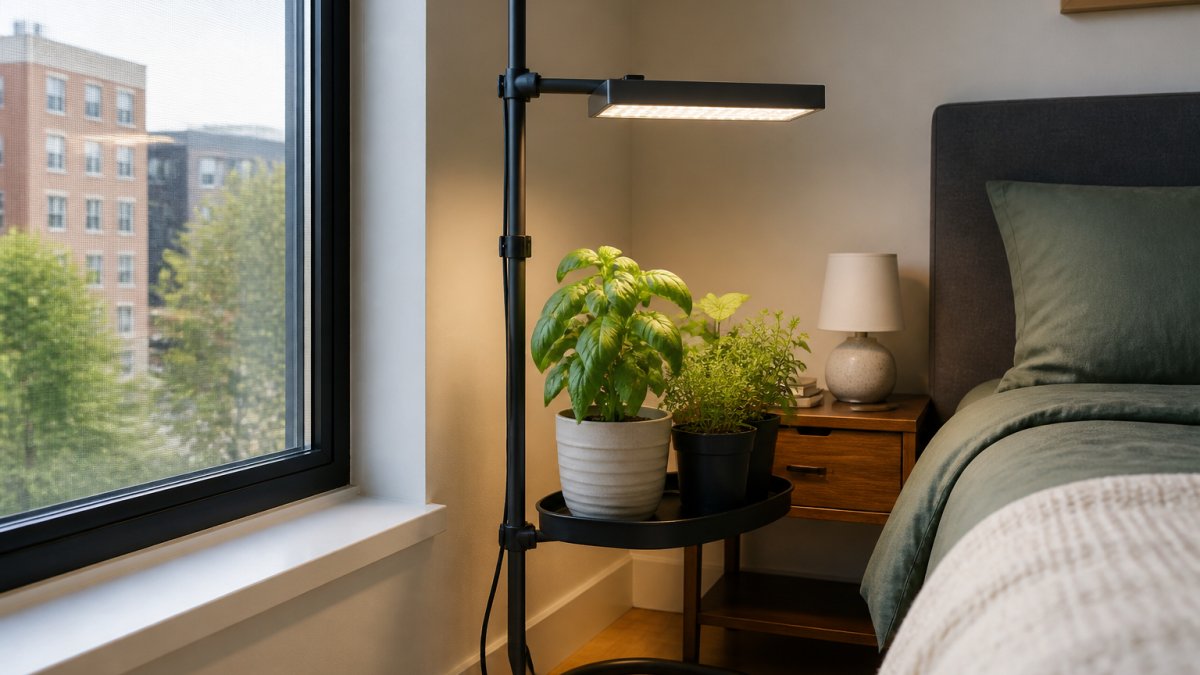
Tabletop and stand mounting. Most of our compact lights mount on adjustable stands or shelves.
Cable management. Long leads look messy and create trip hazards.
Window placement. Put your light near a window when possible: natural daylight supplements it and cuts electricity use.
Humidity and condensation. Thin walls and poor insulation mean grow lights can cause condensation on windows or walls.
The Gorilla Propagation LED and Secret Jardin lights are especially renter-friendly: lightweight with minimal setup.
Choosing the Right Light for Your Space and Budget
The best grow light for your apartment depends on what you're growing, your space, and your budget.
Ask yourself: herbs and leafy greens, or flowering plants? A dedicated growing area, or a light fitted into an existing shelf?
For herbs and leafy greens in a small area with minimal electricity costs, start with a Gorilla Propagation LED or Secret Jardin Cosmorrow.
For a multi-layer vertical garden, Sanlight Flex strips add light between tiers without bulky fixtures.
For most apartment growers, start with one light in the 20-60W range, observe your plants for 4-6 weeks, then add supplemental lights if needed.
Electricity Costs and Operating Efficiency
Running a grow light 16 hours daily is a genuine cost in an apartment, and the gap between 12W and 200W is substantial over a year.
A 12W Gorilla Propagation LED running 16 hours daily uses roughly 57 kWh per year, about £8-10 annually at typical UK rates.
That doesn't mean always choosing the smallest light. A 200W unit covering a larger area is more efficient per plant than three 12W units covering the same space.
The Sanlight Flex and Secret Jardin TLED lights sit in the middle at 20-42W per unit, so running costs stay modest even with multiple lights. A 42W Secret Jardin TLED costs roughly £25-30 annually.
UK energy efficiency guidance for indoor gardening
Getting Started: Your Next Step
The best grow lights for small apartments balance output, space, and cost. Whether you choose one powerful light or multiple compact strips, match the light to your actual growing area and plant needs.
At The Growers Shop, we stock a comprehensive range of advanced solutions, including full grow tent kits, high-performance grow lights, and specialized nutrients to support your indoor, outdoor, and greenhouse projects.
Start with one light, observe how your plants respond, and expand from there. Most successful apartment gardens grow gradually, not overnight. The right equipment is the difference between weak, stretched plants and healthy herbs and vegetables year-round.
Frequently Asked Questions
What is the best grow light for a small apartment?
The Maxibright Daylight LED 200W Pro (£340) is ideal for small apartments because it covers a 0.8 × 0.8 metre area with silent operation and minimal heat output. For tighter budgets, the Sanlight Flex 20 (£75.78) offers compact, flexible strip lighting that fits shelves or multi-tier setups. The choice depends on your available space and plant types, compact LEDs with full-spectrum output work best for apartments where heat and noise matter.
How far should a grow light be from indoor plants?
Most LED grow lights should be positioned 30-60 centimetres above plants during vegetative growth, and 45-90 centimetres during flowering to prevent light burn. Propagation lights like the Gorilla Propagation LED 8W can hang much closer, around 15-30 centimetres above seedlings. Always check your light's specifications and adjust based on plant response, if leaves bleach or curl, raise the light higher.
How many hours a day should a grow light be on for indoor plants?
Seedlings and leafy greens need 14-16 hours of light daily. Herbs typically thrive on 12-14 hours. Flowering plants usually require 10-12 hours to trigger blooming. Use a timer to maintain consistent photoperiods, this regularity is more important than absolute brightness. Most growers use plug-in timers or smart controllers to automate light schedules, especially in apartments where manual switching is impractical.
Are compact grow lights safe to use in a small apartment?
Yes, modern LED grow lights are safe for apartments. They produce minimal heat and no toxic fumes. Choose lights with IP65 or IP68 ratings to handle humidity without electrical hazard. Ensure proper cable management, avoid overloading outlets, and maintain adequate ventilation to prevent condensation. LED lights use far less electricity than older HPS systems, making them both safer and cheaper to run in shared living spaces.
What is the best budget grow light for apartments in the UK?
The Gorilla Propagation LED 8W (£19.99) is the most affordable entry point, ideal for herbs and small propagation. For slightly more, the Secret Jardin Cosmorrow COP LED (£19.99) offers full-spectrum options. The Secret Jardin TLED 26W (£45) provides excellent value for seedlings or supplemental lighting. These options stay well under £50 and work in tight spaces, though they cover smaller areas than larger systems.