

Expert Guidance for Indoor Plant Cultivation Explained
Quick Summary
Successful indoor plant cultivation depends on matching each plant to the light, water, soil and feeding conditions your home can actually provide. Most struggling houseplants are in the wrong spot, watered on a timetable instead of by need, or growing in a mix that holds too much water.
- Start by noting how many hours of direct sun each window gets and which direction it faces.
- Light falls away sharply with distance from the glass, so keep light-hungry plants closest to the window.
- Check moisture at root depth rather than watering on a fixed calendar schedule.
- Always use pots with drainage holes and empty saucers ten to fifteen minutes after watering.
- Isolate new plants for a couple of weeks before placing them with your collection.
Table of Contents
- Choosing Suitable Indoor Plants and the Right Location
- Indoor Plant Lighting Guide: Matching Light to Each Plant
- How Often to Water Houseplants Without Overwatering
- Best Soil for Indoor Plants: Coco Coir, Peat-Free Compost and Potting Mixes
- Building a Houseplant Care Schedule for Feeding, Repotting and Pests
- Troubleshooting Symptoms and Seasonal Adjustments
- Booking Your Starter Setup and Expert Advice at The Growers Shop
- Frequently Asked Questions
Last Updated: October 29, 2026
Growing plants indoors is one of the most rewarding ways to bring colour and calm into a home, but successful indoor plant cultivation depends on getting a handful of basics right. Expert guidance for indoor plant cultivation starts with matching each plant to the conditions you can actually provide: light, water, soil and feeding. Most struggling houseplants are not badly loved; they are often in the wrong spot, watered on a timetable instead of by need, or growing in a mix that holds too much water.
This guide walks through the seven areas that decide whether an indoor garden thrives, from choosing plants and placing them well through to troubleshooting when something looks wrong.
Choosing Suitable Indoor Plants and the Right Location
Start with the room, not the plant. Note how many hours of direct sun each window gets, whether it faces north, south, east or west, and how far a plant can sit from the glass before light drops off sharply. A south-facing window suits sun-lovers, while a north-facing spot is better for ferns and low-light foliage plants.
Once you know your conditions, pick plants that fit them. A common mistake is buying a plant because it looks good in a shop and then placing it in a dim hallway. Choose species whose care profile matches your home, and keep the most light-hungry plants closest to the window.
Indoor Plant Lighting Guide: Matching Light to Each Plant
Light is the variable most often underestimated, and it is the one that decides how fast a plant grows, how compact it stays and how much water and feed it can use. Rather than guessing, work out what each spot in your home actually delivers and then group plants by that level.
Estimate light by window orientation and distance
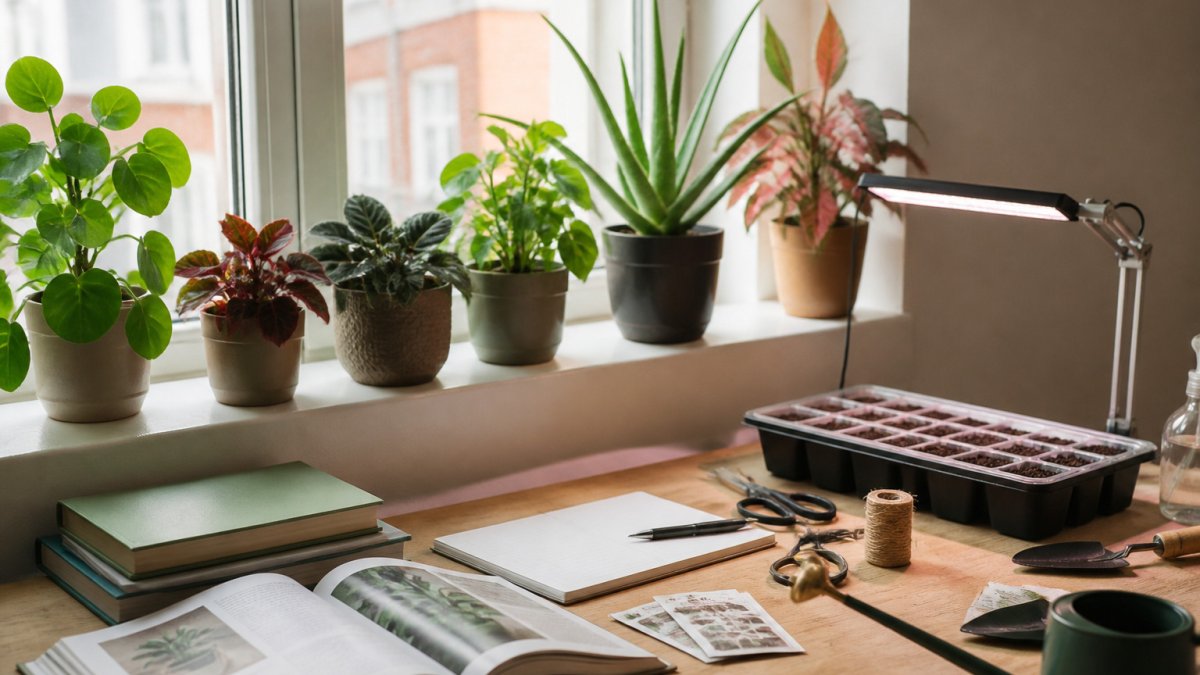
As a working rule, a south-facing windowsill receives the strongest direct sun through the middle of the day, an east-facing one gets gentler morning sun, a west-facing one gets stronger afternoon sun, and a north-facing one receives only indirect light all day. Light falls away sharply with distance from the glass: a plant a metre back from a bright window may receive a small fraction of what it would on the sill, and a shelf in the middle of a room is dimmer still. Corners, alcoves and rooms with small windows are the usual culprits when a plant refuses to thrive.
Read the plant's signals
Plants tell you when light is wrong. Too little light produces stretched stems, wide gaps between leaves, small pale new leaves, variegated plants reverting to plain green, and older leaves dropping. Too much direct sun scorches leaves, leaving bleached or brown patches on the side facing the glass (How to Help a Poorly Houseplant). A plant that leans hard towards the window is asking for more light or a quarter-turn each week so it grows evenly.
Match light levels to plant groups
- High light: cacti, succulents, citrus and many flowering houseplants want several hours of direct sun and the brightest spot you have.
- Medium light: most foliage plants, including philodendrons, monsteras and ficus, prefer bright indirect light close to a window but out of harsh midday sun.
- Low light: ferns, snake plants and some pothos tolerate dimmer spots, but "low light" still means enough to read a newspaper by, not a windowless hallway.
Use supplementary lighting properly
Where daylight is limited, especially in winter, supplementary lighting closes the gap. The Gorilla Propagation LED 8W with Support Bar is a compact option for seedlings and cuttings, delivering a 6500K spectrum and mounting directly above propagation trays. Match the fixture to the job: seedlings and cuttings need gentle light close overhead, while established foliage plants need less intensity but a consistent day length. Run lights on a timer so plants receive the same rhythm daily, and keep the fixture far enough above the canopy to avoid scorching leaves.
Rotate and adjust through the year
Day length and sun angle change through the seasons, so a spot that is perfect in June may be too dim in December. Quarter-turn pots weekly for even growth, move sun-lovers closer to the glass in winter, and pull them back in summer to avoid scorch. If you add lighting, increase day length gradually rather than jumping straight to a long photoperiod.
The article groups plants by the light level they need, which makes a quick reference for placement.
| Plant group | Light level | Placement |
|---|---|---|
| Cacti, succulents, citrus, flowering houseplants | High light | Brightest spot, several hours of direct sun |
| Philodendrons, monsteras, ficus | Medium light | Bright indirect light near a window, out of harsh midday sun |
| Ferns, snake plants, some pothos | Low light | Dimmer spots, but still bright enough to read by |
How Often to Water Houseplants Without Overwatering
Overwatering kills more houseplants than any other cause, and underwatering is the close second. The fix is not a better timetable but a reliable way to judge moisture and a watering method that suits the pot.
Check moisture properly, not by the calendar
A finger pushed about two centimetres into the mix is a good start, but it only tells you about the top layer. For larger pots, use a moisture meter or lift the pot to judge weight, a freshly watered pot is noticeably heavier than a dry one. Check at root depth rather than at the surface, because the top can dry while the base stays saturated. Water only when the mix is dry to the touch at the depth the roots occupy, and water thoroughly until it runs from the drainage holes rather than giving small daily sips.
Account for pot size, material and drainage
Small pots dry out far faster than large ones, and terracotta breathes and dries more quickly than glazed ceramic or plastic. A pot without drainage holes is the single biggest overwatering risk: water collects at the base and roots suffocate. Always use a pot with drainage holes, empty the saucer ten to fifteen minutes after watering, and never let a pot stand in water. A layer of grit or gravel in the base of a sealed pot does not substitute for drainage.
Hydroponics For Everybody (Book) →
Match watering to the plant and the season
Succulents and cacti want the mix to dry out almost completely between waterings, while ferns and calatheas prefer it consistently moist but never soggy. Watering needs change with the seasons: in winter, shorter days and slower growth mean less water, while in spring and summer actively growing plants use more. Central heating dries the air and the mix faster, so check more often in heated rooms rather than watering on a fixed weekly schedule.
Improve water quality
Water quality matters too. Hard tap water can leave mineral deposits on the surface of the mix and on leaves over time, so flush the soil occasionally by watering generously and letting it drain through, and let water stand before use where your supply is particularly hard. Room-temperature water is gentler on roots than cold water straight from the tap.
Know the signs of both extremes
Overwatered plants yellow from the lower leaves, feel soft or mushy at the base, and may smell sour at the soil surface. Underwatered plants wilt, develop crisp brown leaf edges, and pull away from the sides of the pot. Check the mix before acting, because both problems can look similar above the soil.
Best Soil for Indoor Plants: Coco Coir, Peat-Free Compost and Potting Mixes
The mix you choose controls how air, water and nutrients move through the pot. Coco coir and peat-free composts are widely used choices for indoor growing, and each suits different situations. Coco coir and peat-free all-mix composts are widely used options for indoor growing.
For growing in a controlled environment, Canna Terra Professional PLUS 50L is formulated for indoor, grow-room conditions, with a pH-adjusted medium and an air-and-water structure. Whichever medium you choose, use fresh potting mix rather than reusing old compost, which can be depleted or compacted.
Building a Houseplant Care Schedule for Feeding, Repotting and Pests
A simple written schedule keeps care consistent. Feed plants during their active growing season and ease off over winter, when growth slows.
Repot only when roots fill the pot, usually every one to two years, and move up one pot size at a time. Inspect plants regularly for pests. Isolating new plants for a couple of weeks before placing them with the rest of your collection is a sensible precaution against spreading pests.
Troubleshooting Symptoms and Seasonal Adjustments
Yellowing leaves usually point to watering problems, so check the soil before changing anything else. Brown leaf tips often signal dry air or irregular watering, while leggy growth suggests too little light. Pale new growth can mean a nutrient shortage. Work through one variable at a time so you can see what made the difference.
Care should also change with the seasons. In winter, reduce watering and feeding, keep plants away from cold draughts and radiators, and expect slower growth. As daylight returns in spring, gradually increase watering, feeding and light exposure to avoid shocking the plants.
Booking Your Starter Setup and Expert Advice at The Growers Shop
If you are just starting out, begin with a few reliable plants, a good potting mix, a moisture meter or simply your finger, and a basic light if your windows are limited. Our team at The Growers Shop can help you choose products that suit your space and your plants. Browse our range of growing media, lighting and nutrients to build a setup that fits your home.
Frequently Asked Questions
How do you start growing plants indoors?
Start by choosing plants that suit the light in your home, then pick a container with drainage holes and a suitable potting mix. A south-facing window or a basic LED light helps most houseplants. Begin with one or two easy species, such as pothos or snake plant, so you can learn their watering rhythm before expanding. Keep a simple log of watering and light for the first few months, which makes it easier to spot patterns and adjust your routine.
How often should you water indoor plants?
Most houseplants need water when the top few centimetres of potting mix feel dry to the touch. Check with a finger before watering rather than following a fixed calendar, because light, temperature and pot size all change how quickly soil dries. Water thoroughly until it drains from the base, then empty the saucer. Overwatering causes more houseplant losses than underwatering, so when in doubt, wait a day or two longer.
What is the best soil for indoor plants?
A peat-free, well-draining potting mix suits most indoor plants, and CANNA Terra Professional PLUS 50L, priced at £27.48, is a pH-adjusted option designed for indoor grow-room conditions. Coco coir is a good alternative because it holds moisture while still allowing air to reach the roots, though it usually needs feeding from the start. Avoid garden soil in pots, as it compacts and drains poorly indoors.
How do you keep indoor plants healthy in a small space?
Group plants with similar light and water needs, rotate pots every few weeks so all sides receive light, and keep leaves clear of dust. Good airflow matters in small rooms, so avoid crowding plants tightly together. Monitor humidity with a hygrometer such as the Gorilla Min/Max Thermo-Hygrometer with Probe, which records minimum and maximum readings so you can see when conditions drift outside your plants' comfort range.
