

How to Grow Medicinal Herbs at Home: A Step-by-Step Guide
Table of Contents
- Why Grow Medicinal Herbs at Home
- Choosing Medicinal Plants to Grow at Home
- Setting Up Your Home Herb Garden Space
- How to Grow Herbs from Seed
- Using Grow Lights for Herbs Indoors
- Watering and Ongoing Plant Care
- When to Harvest Herbs and Drying for Storage
- Troubleshooting Common Growing Problems
- Frequently Asked Questions
Last Updated: October 18, 2026
Why Grow Medicinal Herbs at Home
Growing medicinal herbs at home puts healing plants within arm's reach. You control the growing conditions, harvest timing, and storage methods, all critical for potency and safety. Many home gardeners find that cultivating medicinal plants transforms their relationship with wellness, giving them confidence to prepare their own remedies rather than relying entirely on shop-bought alternatives.
The Growers Shop provides premium gardening products and expert guidance tailored to meet the needs of every gardener. The shift requires understanding which herbs suit your space, how to grow them successfully, and when to harvest for maximum therapeutic benefit.
This guide covers everything from selecting beginner-friendly medicinal plants to drying and storing your harvest. Whether you have a sunny windowsill, a small patio, or indoor space with artificial lighting, you can grow medicinal herbs at home. We'll walk you through each stage so you avoid common pitfalls and build a thriving garden.
Choosing Medicinal Plants to Grow at Home
The best medicinal herbs for home growing are those you'll actually use and that match your growing conditions. Start with reliable performers that tolerate variable light, irregular watering, and typical indoor temperatures.
Consider these factors when selecting medicinal plants:
- Your intended use, Do you want herbs for tea, topical preparations, or culinary additions?
- Available space, Windowsill, patio, or dedicated indoor setup?
- Light levels, Full sun (6+ hours), partial shade, or reliance on grow lights?
- Time commitment, Some medicinal herbs need minimal care; others demand attention
- Safety and interactions, Certain herbs interact with medications or aren't suitable during pregnancy
Beginner-friendly herbs and plants
Chamomile is forgiving and prolific. It tolerates poor soil, irregular watering, and partial shade. Harvest flowers when they fully open and dry them for calming tea.
Lemon balm grows vigorously in containers and indoors. Pinch back regularly to encourage bushy growth. The leaves make a pleasant, mild tea with gentle calming properties.
Parsley (flat-leaf and curly) is a dual-purpose herb, culinary and medicinal. It's cold-hardy and grows well on windowsills. Harvest outer stems first to encourage new growth.
Basil thrives in warmth and bright light. Sweet basil and holy basil both have medicinal applications. Keep pinching the growing tips to prevent flowering and extend the harvest.
Calendula (pot marigold) produces vibrant orange flowers used in salves and infusions. It's drought-tolerant once established and self-seeds readily, so you'll have plants year after year.
Lavender is low-maintenance and aromatic. It prefers well-drained soil and full sun. Harvest flower spikes just as they begin to open for maximum scent and therapeutic compounds.
Red clover grows as an annual or short-lived perennial. It fixes nitrogen in soil naturally and produces nutrient-dense flowers used in herbal preparations.
| Herb | Best For | Light Needs | Water Needs | Harvest Timing |
|---|---|---|---|---|
| Chamomile | Tea, relaxation | Partial shade | Moderate | When flowers fully open |
| Lemon balm | Tea, aromatics | Part sun to shade | Moderate | Before flowering |
| Parsley | Culinary, nutrition | Part sun to shade | Consistent | Outer stems first |
| Basil | Tea, culinary | Full sun | Moderate | Regular pinching |
| Calendula | Salves, infusions | Full sun | Low | As flowers open |
| Lavender | Aromatics, relaxation | Full sun | Low | Just as spikes open |
| Red clover | Nutritive tea | Part sun | Moderate | When flowers fully open |
Setting Up Your Home Herb Garden Space
Success with medicinal herbs depends heavily on matching plants to your available light and choosing the right containers and soil.
Sunlight and site selection
Most medicinal herbs need at least 6 hours of direct sunlight daily to develop strong growth and potent therapeutic compounds. If your home doesn't receive this naturally, you'll need supplemental lighting.
Windowsill placement, South-facing windows provide the most consistent light in temperate climates. East-facing windows offer gentler morning sun. West-facing windows can work but may create excessive heat in summer. North-facing windows rarely provide enough light for most medicinal herbs.
Indoor gardens without natural light, This is where grow lights become essential. Position lights 15-30 cm above the plant canopy. Adjust height as plants grow to maintain consistent intensity.
Temperature and air circulation, Most medicinal herbs prefer temperatures between 15-21°C. Avoid placing them directly above radiators or in cold drafts. Gentle air movement (a small fan on low speed) prevents fungal issues and strengthens stems.
Planting herbs in pots or containers
Container gardening offers flexibility and control. Choose containers with drainage holes, waterlogging kills more herbs than drought.
Container size guidelines:
- Small herbs (parsley, lemon balm): 15-20 cm pots
- Medium herbs (basil, chamomile): 20-25 cm pots
- Larger herbs (lavender, red clover): 25-30 cm pots
Soil preparation with compost, Use peat-free compost blended with aged compost or well-rotted bark. This combination provides good drainage while retaining moisture. Heavy clay soil or standard garden soil compacts in pots and causes root rot.
Medicinal herbs generally prefer soil on the drier side. Add extra perlite or horticultural grit (10-15% by volume) to improve drainage further.
Succession planting, Sow new seeds or plant seedlings every 3-4 weeks to ensure a continuous harvest. This approach prevents gaps when older plants decline.
How to Grow Herbs from Seed
Growing medicinal herbs from seed is economical and gives you control over plant genetics and growing conditions.
Sowing and germination
Timing, Start seeds indoors 6-8 weeks before your last spring frost, or year-round under grow lights.
Seed depth, Most medicinal herb seeds are small. Sow them on the soil surface or just barely covered. Check the seed packet for species-specific guidance.
Moisture and warmth, Keep soil consistently moist (not waterlogged) during germination. Most herb seeds germinate at 18-21°C. Basil and some tropical herbs prefer 21-24°C.
Germination timeline:
- Basil: 5-10 days
- Parsley: 14-21 days
- Chamomile: 7-14 days
- Lavender: 14-30 days
- Calendula: 7-14 days
Light after germination, Once seedlings emerge, provide 14-16 hours of bright light daily. Position grow lights or place seedlings in a bright windowsill to prevent leggy, weak growth.
Preparing soil with compost
Quality compost is the foundation of healthy seedlings. Use a seed-starting mix (peat-free varieties are increasingly available) or blend equal parts aged compost, coconut coir, and perlite.
Avoid garden soil or heavy compost for seed starting, these compact and prevent roots from establishing. Seed-starting mixes drain freely while retaining just enough moisture.
Fill containers to within 1 cm of the rim. Firm gently (don't compact) and water thoroughly before sowing.
Garland Grow Light Garden Black →
Using Grow Lights for Herbs Indoors
Grow lights transform indoor herb gardening from a frustrating struggle into a reliable system. They're especially valuable during winter months or in flats with limited natural light.
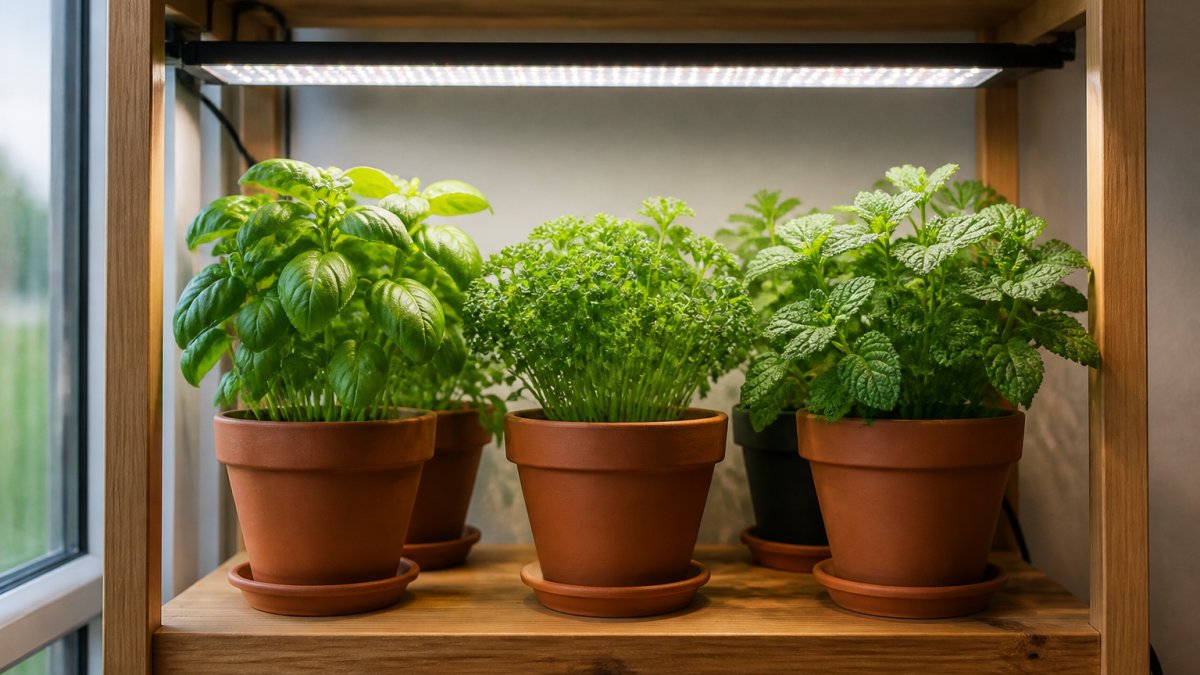
Full-spectrum lights replicate natural sunlight's colour range. They're ideal for all growth stages, germination through flowering and harvest.
Light intensity and duration, Most medicinal herbs need 14-16 hours of light daily indoors. Position lights 15-30 cm above the canopy.
Power consumption, Modern grow lights are efficient. The Garland Micro Grow Light Garden (£76.25) uses just 11 watts, less power than a standard domestic light bulb, yet delivers sufficient intensity for herbs.
Heat management, Quality grow lights produce minimal heat. The NanoTech reflectors in Garland systems reflect 100% of light toward plants while reducing heat buildup, preventing stress to tender seedlings.
Self-watering features, The capillary matting supplied with Garland systems allows plants to self-water for up to 14 days, ideal for busy gardeners or those managing multiple plants.
Watering and Ongoing Plant Care
Overwatering is the most common cause of failure with medicinal herbs. Most prefer dry periods between waterings.
Watering guidelines:
- Check soil moisture before watering, it should feel dry to the touch 2-3 cm below the surface
- Water thoroughly until it drains from the bottom, then empty saucers
- Reduce watering in winter when growth slows
- Morning watering is preferable to evening (reduces fungal risk)
Feeding and nutrients, Most medicinal herbs don't need heavy feeding. Compost provides baseline nutrients. If plants pale or growth slows, apply a dilute balanced liquid feed (half-strength) every 2-3 weeks during the growing season.
Pinching and pruning, Regular pinching encourages bushier, more productive plants. Remove the top 1-2 cm of new growth weekly. This delays flowering and extends the harvest window.
Common pests and prevention, Indoor herbs occasionally attract spider mites, whitefly, or mealybugs. Inspect leaves regularly (especially undersides). Spray affected plants with a water-spray or neem oil solution if pests appear. Good air circulation and avoiding overwatering prevent most infestations.
When to Harvest Herbs and Drying for Storage
Harvest timing directly affects potency. Medicinal compounds peak at specific growth stages.
Harvesting at peak potency
Leaf herbs (basil, parsley, lemon balm), Harvest in the morning after dew dries but before the heat of the day. Pinch or cut the top 5-10 cm of growth. Plants recover quickly and produce multiple flushes.
Flowers (chamomile, calendula, lavender), Harvest just as flowers fully open. Chamomile and calendula flowers are used whole. Lavender spikes should be cut when the lowest flowers have opened but the top buds remain closed.
Roots (if growing perennial medicinal plants), Harvest in autumn after the plant has finished flowering and stored energy in the root system.
Drying and storing herbs
Air-drying, Tie small bundles loosely and hang upside-down in a warm, dark, well-ventilated space (18-21°C is ideal). Avoid direct sunlight, which degrades therapeutic compounds. Drying typically takes 1-2 weeks.
Storage, Once completely dry, store herbs in airtight glass containers away from light and heat. Properly dried medicinal herbs retain potency for 6-12 months. Label containers with the herb name and harvest date.
Moisture content, Herbs are ready for storage when they crumble easily between your fingers but aren't so dry they turn to powder. Residual moisture invites mold; excessive dryness causes loss of volatile oils.
Troubleshooting Common Growing Problems
Leggy, weak seedlings, Cause: insufficient light. Solution: Move seedlings closer to a window or grow light, or increase light duration to 16 hours daily.
Yellow leaves on established plants, Cause: overwatering or poor drainage. Solution: Reduce watering frequency and ensure containers have drainage holes.
Slow growth or pale foliage, Cause: inadequate light or nutrient deficiency. Solution: Increase light exposure or move to a brighter location.
Powdery white coating on leaves, Cause: powdery mildew fungus, often triggered by poor air circulation. Solution: Improve ventilation with a small fan. Remove affected leaves.
Brown leaf tips, Cause: inconsistent watering, low humidity, or salt buildup in soil.
No flowering or slow flowering, Cause: insufficient light or over-fertilizing with nitrogen. Solution: Increase light exposure. Reduce nitrogen-heavy feeding; switch to a higher-phosphorus formula to encourage flowering.
Many gardeners find that keeping a simple growing log, noting watering dates, light hours, and plant responses, reveals patterns and helps troubleshoot recurring issues quickly.
Growing medicinal herbs at home transforms your wellness routine and deepens your connection to plant medicine.
The Growers Shop supports your journey with professional-grade grow lights and guidance.
Frequently Asked Questions
What are the easiest medicinal plants to grow at home for beginners?
Basil, parsley, coriander, lemon balm, and chamomile are ideal starting points. These herbs tolerate variable conditions, grow quickly from seed, and require minimal maintenance. Basil thrives in warm spots with six or more hours of sun, whilst chamomile and lemon balm are hardy perennial options that handle partial shade. Start with one or two varieties to build confidence before expanding your medicinal herb garden.
Can medicinal herbs be grown indoors successfully?
Yes, medicinal herbs grow well indoors with proper setup. Full-spectrum grow lights replicate natural sunlight, allowing year-round cultivation in flats or apartments. The Garland Grow Light Gardens feature 6400K full-spectrum lights designed specifically for herbs and salads, with adjustable height to optimise growth. Indoor growing offers control over humidity, temperature, and light, critical for consistent harvests of potent medicinal plants.
How much light do medicinal herbs need to thrive?
Most medicinal herbs need six or more hours of direct sunlight daily. Basil, lavender, and calendula prefer bright conditions, whilst lemon balm and parsley tolerate partial shade. Indoors, full-spectrum grow lights at 6400K colour temperature replicate this requirement. Position lights 15-20cm above seedlings and adjust as plants grow. Insufficient light causes weak, leggy growth and reduced potency in healing herbs.
When should you harvest and dry medicinal herbs to preserve their potency?
Harvest medicinal herbs just before flowering for peak active compound concentration. Early morning, after dew dries but before heat builds, is optimal. Dry herbs in a warm, dark, well-ventilated space (18-24°C) away from direct sunlight, which degrades medicinal properties. Hang bundles upside down or spread on screens for 1-2 weeks until crispy. Store dried herbs in airtight glass containers away from light to maintain potency for 6-12 months.