

Organic nutrients for indoor plants: A how-to guide
Table of Contents
- Why organic nutrients matter for indoor plants
- Diagnosing nutrient deficiency before you feed
- How to make homemade plant food for indoor plants
- How often to fertilise houseplants with organic nutrients
- Best fertiliser for indoor plants: comparing organic options
- Safe application rates and dilution for indoor growing
- Protecting soil health and beneficial microbes indoors
- Common mistakes to avoid when feeding indoor plants
- Frequently Asked Questions
Last Updated: October 19, 2026
Why organic nutrients matter for indoor plants
Growing plants indoors demands a different approach to feeding than outdoor gardening. Your indoor plants rely entirely on you to provide the nutrients they'd naturally extract from soil through microbial activity and weathering. Organic nutrients for indoor plants create a living soil ecosystem that sustains plant health over time, rather than simply delivering a quick nutrient hit.
The key difference is microbial activity. Organic matter feeds beneficial bacteria and fungi that break down nutrients into forms plants can actually absorb. This creates a self-regulating system where overfeeding becomes nearly impossible, the microbes consume excess nutrients before they accumulate to toxic levels. Synthetic fertilisers bypass this entirely, delivering soluble nutrients directly to roots.
For growers transitioning from basic care to serious indoor cultivation, shifting to organic feeding strategies can dramatically improve results. This isn't just about plant health, it's about building a stable growing medium that improves with each cycle rather than degrading.
Diagnosing nutrient deficiency before you feed
Most growers overfeed because they mistake normal variation for hunger. Before adding anything to your growing medium, you need to confirm an actual deficiency exists.
The visible signs vary by nutrient type. Nitrogen deficiency shows as yellowing of lower leaves while upper growth stays green, the plant's pulling nitrogen from older tissue to support new growth (Nutrient deficiencies). Phosphorus deficiency appears as purple or reddish discolouration on stems and leaf undersides.
However, these symptoms also appear when roots are damaged, pH is wrong, or watering is inconsistent. Before diagnosing a nutrient problem, check your fundamentals: Is the soil staying evenly moist without waterlogging? Is your pH in the 6.0-7.0 range for soil-based growing? Are roots healthy and white, not brown and slimy? If these basics are off, feeding won't help.
How to make homemade plant food for indoor plants
Creating your own homemade plant food for indoor plants costs pennies and uses kitchen scraps most people throw away. The challenge is understanding what each ingredient actually provides and using appropriate dilution rates to avoid problems in enclosed spaces.
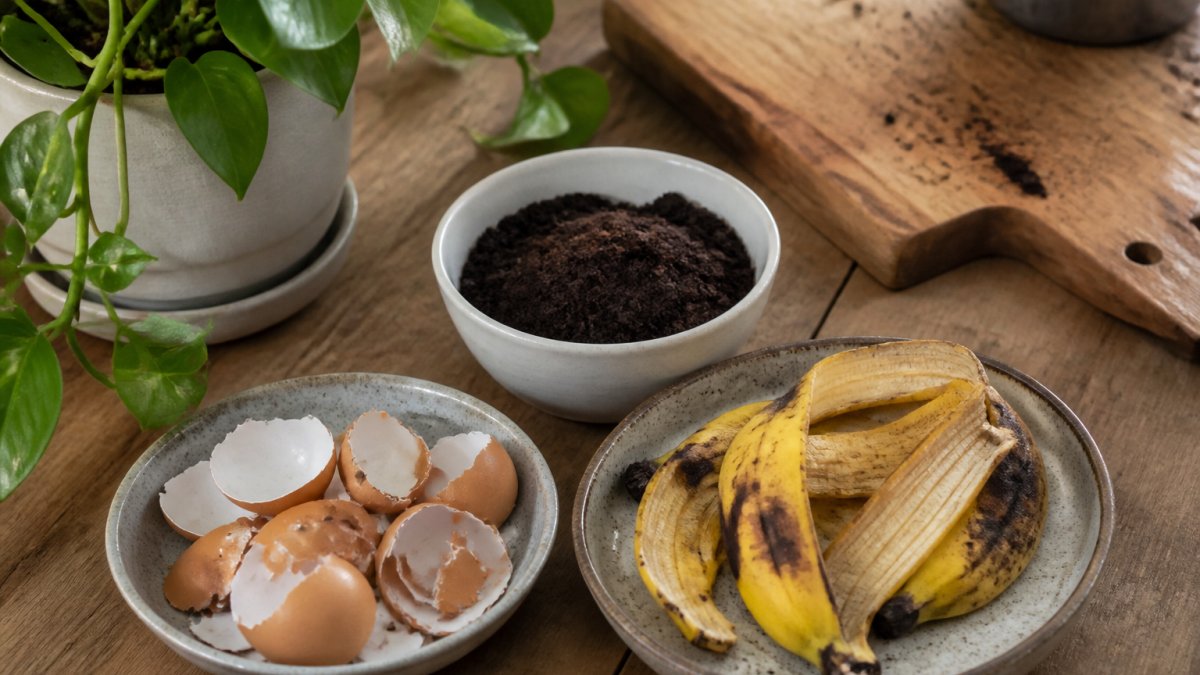
Coffee grounds and eggshells
Used coffee grounds contain roughly 2% nitrogen by weight, comparable to weak commercial fertiliser. They also feed beneficial microbes directly. The key is using them properly: fresh grounds can compact and repel water, so let them dry fully before adding to soil. Mix dried grounds into the top inch of soil at a ratio of no more than 1 part grounds to 10 parts soil.
Crushed eggshells provide calcium and small amounts of other minerals. They break down slowly, so they're useful as a long-term amendment rather than an immediate nutrient source. Crush shells finely and mix into fresh potting soil before planting, or sprinkle around the base of established plants. Because they dissolve gradually, they won't cause nutrient imbalances.
Fish emulsion and seaweed solutions
Fish emulsion is nitrogen-rich and smells terrible indoors, but it works. Make a basic version by fermenting fish scraps (heads, bones, guts from cooking) in water for 2-3 weeks in a sealed container. Strain out solids and dilute the liquid 1 part emulsion to 10 parts water before applying. For indoor growing, use this diluted version monthly during active growth. The smell fades as it dries.
Seaweed extract provides trace minerals and growth-promoting compounds. Steep dried seaweed (available cheaply online) in water for 24 hours, strain, and dilute 1 part to 20 parts water. This mild solution can be applied weekly without risk of overfertilising.
Epsom salt for magnesium and calcium
Epsom salt (magnesium sulphate) addresses specific deficiencies without adding excess nitrogen. Dissolve 1 teaspoon in 1 litre of water and apply as a foliar spray or soil drench every 4-6 weeks during active growth. Overuse causes salt accumulation, so stick to this schedule and no more. For indoor plants showing magnesium deficiency (yellowing between leaf veins), this is faster than waiting for organic matter to break down.
How often to fertilise houseplants with organic nutrients
How often to fertilise houseplants depends on growth stage, pot size, and organic matter content of your soil. This is where indoor growing differs most from outdoor gardens.
During active growth (spring and summer), most houseplants need feeding every 3-4 weeks with dilute organic solutions. During dormancy (autumn and winter), reduce frequency to every 6-8 weeks or stop entirely. Plants in small pots (under 2 litres) need more frequent feeding because they have less soil volume to buffer nutrients.
The real signal is growth rate. If your plant is putting out new leaves every week, it's consuming nutrients quickly. If growth has slowed or stopped, reduce feeding frequency. Overfeeding in winter is a common mistake, plants aren't growing, so they don't need nutrients, but growers feed on a fixed schedule anyway.
Best fertiliser for indoor plants: comparing organic options
The best choice depends on your setup and what you're growing.
Liquid organic fertilisers
Liquid feeds work fastest because nutrients are already dissolved. Biobizz Bio Grow (£10.95 for 1 litre at The Growers Shop) is made from fermented sugar beet extract and feeds both plants and soil microbes. It's designed for vegetative growth and works well for leafy houseplants and herbs. Apply diluted according to label instructions weekly during active growth.

Liquid options give you precise control over feeding rate. You can dial back concentration if plants show any sign of stress. The downside is frequency, you're mixing and applying every week or two, which adds time.
Dry organic amendments
Dry amendments break down gradually, creating a steady nutrient supply. Ecothrive Charge (£7.00 for 500g at The Growers Shop) is mealworm frass, essentially insect manure, compressed into chunks. It contains a balanced 3.5:2.5:2 N:P:K ratio and feeds beneficial soil microbes through chitin, which fungi use as food.
Ecothrive Life-Cycle (£8.95 for 1kg at The Growers Shop) is a balanced organic mix designed to be mixed into soil or used as a top dressing. It's less concentrated than Charge, making it gentler for sensitive plants and better for preventing overfertilisation in small pots.
Dry amendments require less frequent application but give you less control if a problem develops. You can't quickly reduce the nutrient level if a plant shows stress.
| Option | Type | Cost per application | Frequency | Best for |
|---|---|---|---|---|
| Biobizz Bio Grow | Liquid | £0.20-0.40 | Weekly | Herbs, leafy plants, active growth |
| Ecothrive Charge | Dry | £0.35-0.50 | Every 4-6 weeks | Long-term feeding, balanced nutrition |
| Ecothrive Life-Cycle | Dry | £0.25-0.35 | Every 4-6 weeks | Soil building, gentle feeding |
| Homemade fish emulsion | Liquid | £0.05 | Monthly | Budget-conscious growers, nitrogen boost |
| Epsom salt | Mineral | £0.10 | Every 4-6 weeks | Magnesium deficiency only |
Safe application rates and dilution for indoor growing
Indoor spaces have less air movement and drainage than greenhouses or outdoor gardens. This means nutrients accumulate faster and problems develop quicker. Dilution is your safety margin.
For any liquid organic nutrients for indoor plants, start at half the recommended strength. Mix, apply, and observe for two weeks. If plants respond well (new growth, healthy colour), you can increase to full strength next application. If leaves show any browning at edges or unusual discolouration, reduce concentration further.
Measure carefully. A tablespoon of concentrated solution in a small pot is very different from a tablespoon in a large pot. Use a measuring cup, not eyeballing.
Water your plant with plain water before applying any fertiliser solution. Feeding dry soil can cause salt burn. Water after feeding as well to help nutrients move through the soil and prevent surface accumulation.
Protecting soil health and beneficial microbes indoors
The microbes in your soil do the real work. They break down organic matter, release locked nutrients, and suppress disease. Protecting them matters more than the nutrients themselves.
Avoid temperature swings. Beneficial microbes thrive in stable conditions around 18-22°C. If your growing space fluctuates between 10°C at night and 28°C during the day, microbial activity drops.
Don't let soil dry completely between waterings. Microbes need moisture. Conversely, don't keep soil waterlogged, they need oxygen too.
Organic matter is microbial food. When you use products like Ecothrive Life-Cycle or add homemade compost, you're feeding the ecosystem.

Avoid chlorinated water if possible. Chlorine kills beneficial microbes. If your tap water is heavily chlorinated, let it sit in an open container for 24 hours before using, or collect rainwater.
Common mistakes to avoid when feeding indoor plants
Overfeeding is the most common error. Indoor growers often follow a fixed schedule regardless of plant growth stage or season. Your plant doesn't need feeding in winter when it's dormant.
Another mistake is feeding weak plants. If a plant looks unhealthy, the problem is usually light, water, or temperature, not hunger.
Mixing different fertilisers in the same pot is risky. Each product has a different nutrient ratio and concentration. Combining them makes it impossible to predict the actual nutrient level.
Ignoring salt accumulation is a slow killer. If you notice white crusty deposits on the soil surface or pot rim, that's salt buildup.
Finally, don't assume homemade solutions are weaker and therefore safer. Fermented fish emulsion or concentrated coffee grounds can burn roots just as easily as commercial fertiliser if applied too strong. Dilute generously and start weak.
Growing healthy indoor plants with organic nutrients comes down to understanding what your plants actually need and building a stable soil ecosystem to deliver it. The Growers Shop stocks professional-grade organic products like Biobizz Bio Grow and Ecothrive amendments specifically designed for indoor growing, where precision and microbial health matter most.

Frequently Asked Questions
Can you make homemade plant food for indoor plants?
Yes. Common kitchen ingredients like coffee grounds, eggshells, and banana peels release nutrients as they break down in soil. Fish emulsion and seaweed solutions provide nitrogen and trace minerals. Homemade options work best as supplements rather than complete feeds, and require careful dilution to avoid burning roots. For consistent results, many indoor growers combine homemade recipes with certified organic nutrients like Biobizz Bio Grow to ensure balanced nitrogen, phosphorus, and potassium throughout the growing cycle.
Are coffee grounds good for indoor plants?
Coffee grounds contain nitrogen and can improve soil structure by feeding beneficial microbes. However, they release nutrients slowly and are best used as a top dressing or mixed into fresh potting soil rather than applied directly to active roots. Apply sparingly, no more than a tablespoon per small pot, to avoid mold growth in humid indoor environments. They work well for established plants in their active growth phase but offer minimal benefit during dormancy.
How often should you feed indoor plants with organic nutrients?
Most indoor plants need feeding every 2-4 weeks during active growth (spring and summer) and every 6-8 weeks during dormancy (autumn and winter). Frequency depends on plant type, pot size, and soil composition. Slow-release organic amendments like Ecothrive Charge require application only at the start of each growing phase, while liquid feeds like Biobizz Bio Grow are applied more frequently at diluted rates. Always check soil moisture before feeding, never apply nutrients to dry soil, as this increases the risk of fertiliser burn.
Can organic fertiliser burn houseplant roots?
Yes. Overapplication or improper dilution of any organic fertiliser, homemade or commercial, can cause nutrient burn, shown by brown leaf tips and wilting. Indoor plants in containers are more vulnerable because excess salts cannot drain away easily. Always follow dilution guidance, start with half-strength applications, and allow soil to dry slightly between feeds. If burn occurs, flush the pot with fresh water and reduce feeding frequency. Organic options like Bio Grow are gentler than synthetic fertilisers but still require careful application.